

The Co-Creation Revolution: Insta360 and MakerWorld Launch the "Luna Ultra Design Challenge"

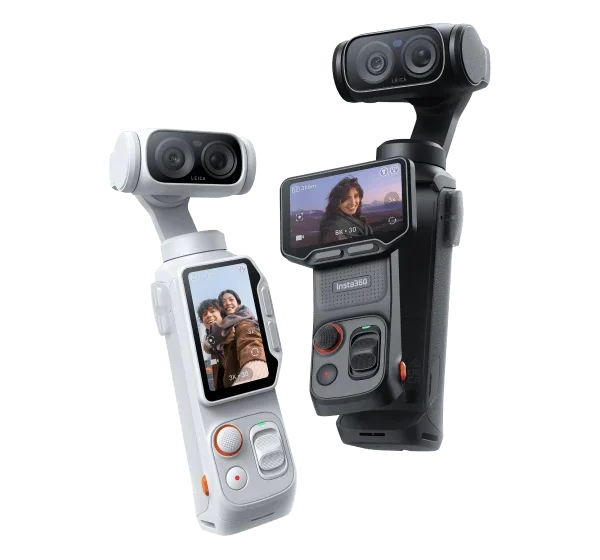
In a bold move that signals a paradigm shift in how consumer electronics manufacturers engage with their user base, Insta360 has partnered with Bambu Lab’s MakerWorld platform to launch the "Luna Ultra Design Challenge." This global competition invites makers, designers, and creative hobbyists to architect the future of accessory design for the Insta360 Luna Ultra, the company’s flagship dual-lens 8K gimbal camera. By placing over $11,000 in prizes on the table and—crucially—releasing official CAD files to the public, Insta360 is effectively crowdsourcing its peripheral ecosystem, transforming its customers from passive consumers into active, collaborative design partners.
The Core Concept: Engineering Meets Creativity
The Luna Ultra Design Challenge is not merely a contest; it is an open-source experiment in product development. By providing official 3MF and STL files, Insta360 has removed the most significant hurdle for independent designers: the guesswork associated with reverse engineering hardware. With precise dimensions and internal structural references available, participants can focus their energies on innovation—whether that means developing specialized mounting systems, protective gear for extreme environments, or entirely new creative tools that expand the camera’s cinematic utility.
The initiative is bifurcated into two distinct tracks, ensuring that both those with technical manufacturing capabilities and those with conceptual vision can participate.
The Model Design Challenge (The Makers)
This track is designed for the technical community. Participants are encouraged to conceive, model, and 3D print original accessories for the Luna Ultra. Submissions are judged on a triumvirate of criteria: originality, functional utility, and aesthetic appeal. By leveraging the vast MakerWorld ecosystem, the challenge ensures that winning designs are not just static images, but physical, functional parts that can be replicated by the global community.
The Social Content Challenge (The Visionaries)
Recognizing that not all creators have access to high-end 3D printers, Insta360 has opened a secondary track for conceptual thinkers. Entrants can submit sketches, detailed 3D renders, videos, or written proposals across social media platforms including Instagram, TikTok, YouTube, Facebook, and Reddit. By using the hashtags #PrintForLuna, #BambuLab, and #Insta360LunaUltra, creators can showcase their ideas to a global audience, proving that the most valuable commodity in the maker movement is often the idea itself.
Chronology of the Challenge
The rollout of the competition is structured to maintain momentum and community engagement throughout the summer of 2026:
- July 10, 2026: The official launch of the challenge. Insta360 releases the comprehensive CAD design kit, marking the company’s debut on the MakerWorld platform.
- July 10 – August 9, 2026: The active submission window. During this month, the community is encouraged to iterate, upload, and promote their designs.
- Ongoing (August 2026): Rolling announcements of community spotlights and interim acknowledgments.
- August 20, 2026: The grand reveal. The final winners are announced, crowning the most innovative and practical designs.
Supporting Data and Incentive Structure
The reward pool for this initiative is significant, totaling over US$11,000 in hardware and prizes. This high-value incentive structure is designed to attract top-tier talent from the CAD and industrial design spheres.
Prize Breakdown
- Model Design Track: The "Most Original Design" winner takes home a premium Luna Ultra Creator Bundle paired with a Bambu Lab X2D Combo. Additional categories include "Best Functional Design" and "Best Aesthetic Entry," alongside twelve runner-up spots and a People’s Choice award.
- Social Content Track: This track mirrors the professional stakes, with "Most Creative" and "Most Practical" idea awards. Each recipient receives a Luna Ultra/Bambu Lab X2D bundle.
- The Mystery Grand Prize: Perhaps the most intriguing element of the challenge is the promise that the most inspiring concept may be developed into an official, mass-produced product. This provides the winner with the rare opportunity to see their idea move from a 3D-printed prototype to a global commercial offering.
Industry Implications: The "Co-Designer" Strategy
The Luna Ultra Design Challenge serves as a case study for the evolving relationship between hardware brands and the maker community. By releasing intellectual property in the form of CAD files, Insta360 is demonstrating a high degree of confidence in its product while acknowledging that no internal R&D department can predict every niche use case required by a global, diverse user base.
Bypassing the Traditional Supply Chain
Historically, camera manufacturers have maintained tight control over accessory ecosystems, often creating proprietary, closed-loop systems that prioritize high-margin, brand-official peripherals. By embracing the 3D printing revolution, Insta360 is effectively crowdsourcing the "long tail" of accessory development. This strategy benefits the company by fostering deep customer loyalty and community engagement, while providing the user with low-cost, highly customizable hardware solutions.
The "Nothing" Precedent and the Rise of Open Hardware
This is not an isolated phenomenon. The consumer electronics industry is witnessing a clear trend toward "open-innovation." The CMF by Nothing brand previously set a high bar by hosting design challenges on the Prusa Research platform for its smartphone accessories. Similarly, the 2014 Fairphone Accessory Challenge and the Ultimaker-OnePlus collaboration demonstrated that providing users with the tools to modify their devices increases product lifespan and satisfaction.
Insta360, however, is the first major camera manufacturer to formalize this process at this scale. By embedding itself into the MakerWorld platform—Bambu Lab’s proprietary ecosystem—the company is ensuring that its files are optimized for the most popular modern 3D printers, reducing friction and ensuring that the community-led designs are of high quality.
Official Stance and Future Outlook
While Insta360 has remained relatively quiet regarding the specifics of the "Mystery Grand Prize," industry analysts suggest this indicates a potential move toward a community-curated product line. By observing which designs gain the most traction, the company gains invaluable market data on what accessories users actually want, versus what the company assumes they want.
This strategy is highly efficient. Instead of conducting expensive and potentially inaccurate focus groups, Insta360 is allowing the market to prove the viability of new accessories. If a 3D-printed lens cap, gimbal mount, or protective housing goes viral on MakerWorld, the company already has the data and the prototype necessary to decide whether to manufacture it at scale.
Conclusion: A New Era of Hardware Customization
The Luna Ultra Design Challenge represents more than just a marketing stunt; it is an acknowledgment that the future of hardware design is decentralized. As 3D printing technology becomes more accessible and refined, the barrier between the manufacturer and the end-user continues to dissolve.
For the professional designer, this is an opportunity to leave a mark on a flagship product. For the casual enthusiast, it is an entry point into the world of industrial design. For Insta360, it is a masterclass in community management and product evolution. As the submission window closes in August, the tech world will be watching closely to see which, if any, of these community-driven designs find their way into the official Insta360 accessory catalog.
For those looking to participate, the full rules, design files, and community guidelines are available on the MakerWorld portal. With the convergence of 8K imaging technology and the democratization of additive manufacturing, the Luna Ultra is shaping up to be one of the most customizable cameras ever produced.
The 3D Printing Industry continues to monitor the intersection of consumer technology and additive manufacturing. We invite practitioners and industry leaders to participate in our 2026 Additive Manufacturing Applications (AMA) series, where we will further explore the integration of crowdsourced design into industrial supply chains. For more updates, subscribe to our newsletter or follow our coverage on LinkedIn.