The Convergence of Intelligence and Motion: Teradyne Robotics and Sereact Forge New Path for Physical AI

In a landmark announcement at NVIDIA GTC Berlin 2026, Teradyne Robotics—the parent organization behind industry giants Universal Robots (UR) and Mobile Industrial Robots (MiR)—revealed a strategic partnership with Sereact, a leader in physical artificial intelligence. This collaboration represents more than a mere vendor agreement; it signals a fundamental shift in how robotics are integrated into the chaotic, unstructured environments of global retail and logistics. By combining Teradyne’s massive install base of over 100,000 industrial units with Sereact’s “Cortex” AI platform, the companies are moving beyond the era of pre-programmed, repetitive automation into a future of adaptive, autonomous machine labor.
Main Facts: A Synergistic Approach to Automation
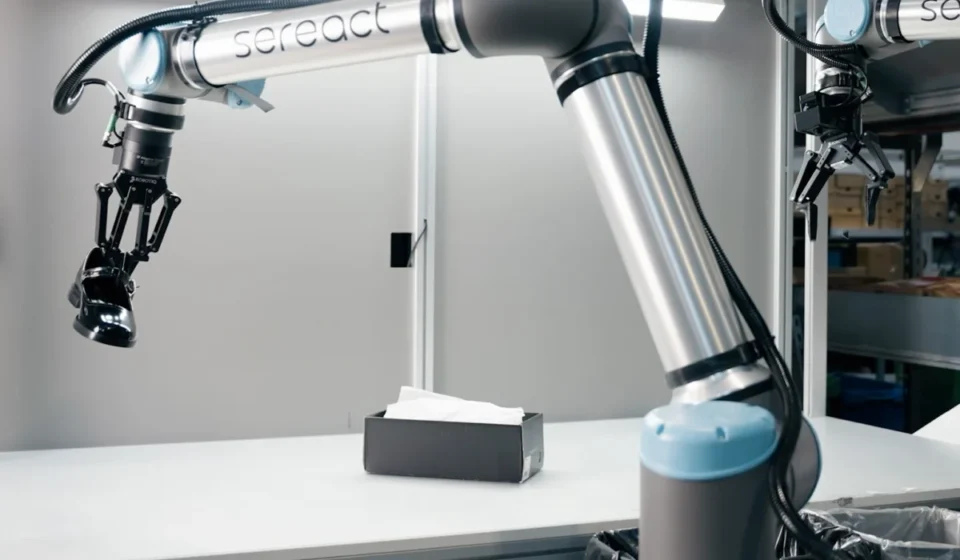
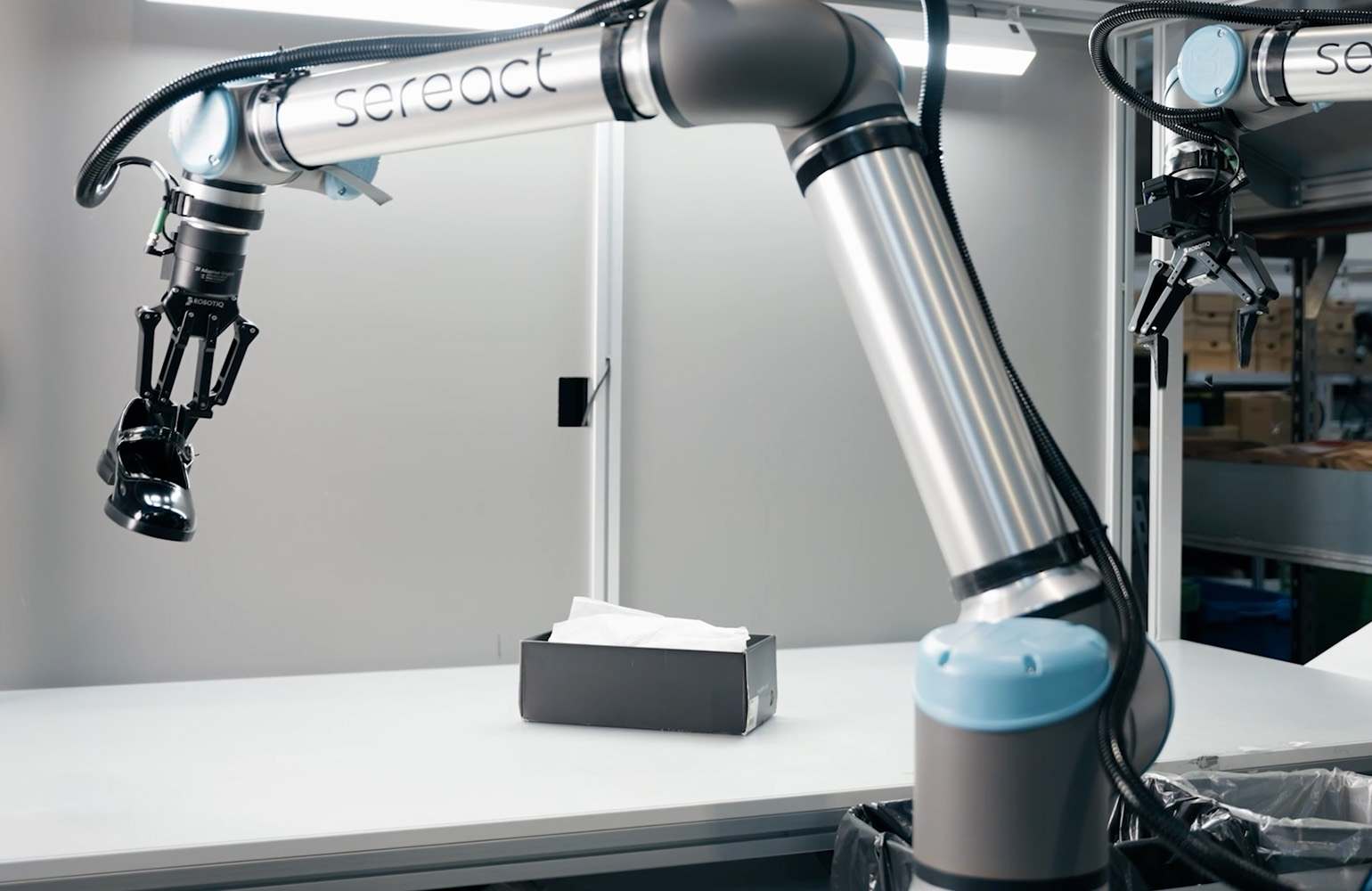
At the heart of this partnership is the integration of Sereact’s Cortex platform with Universal Robots’ cobot arms. Unlike traditional industrial automation, which requires meticulous structuring of the environment—often involving conveyors, jigs, and fixed positioning—the joint solution allows robots to perceive, identify, and grasp objects they have never encountered before.
The technology enables robots to handle "unstructured tasks," a notorious bottleneck in modern logistics. This includes piece picking, sortation, order induction, and the complex process of handling returned merchandise. By utilizing a unified "brain"—a single AI model that powers every connected robot—the system ensures that a lesson learned by one unit in a warehouse in Poland is instantly available to a unit in a facility in the United States. This collective intelligence represents a leap in efficiency, removing the need for individual retraining for each specific SKU or task.
Chronology of Development: From Concept to Global Deployment
The trajectory of this partnership has been defined by rapid acceleration, moving from experimental pilots to live, high-volume production environments in record time.
- Early 2024 – 2025: Sereact begins refining its Cortex platform, focusing on the intersection of computer vision and robotic manipulation. During this period, the company works closely with early adopters to prove that deep learning models can handle the variability of retail returns.
- Summer 2026: Recognizing the explosive demand for North American automation, Sereact establishes its U.S. headquarters in Charlestown, Massachusetts. This move provides the necessary infrastructure to support regional integrators and enterprise clients.
- October 2026: At NVIDIA GTC Berlin, the official partnership between Teradyne Robotics and Sereact is formally announced. The companies demonstrate a dual-arm UR configuration that autonomously processes complex, mixed-item returns for Zalando.
- Current Status: Hundreds of dual-arm Universal Robots units are already operating in live customer sites across Europe, with active deployments in Greven, Germany, and Świebodzin, Poland.
Supporting Data and Technical Architecture
The technical robustness of the solution is underpinned by a deep integration with the NVIDIA technology stack. This is not merely software running on hardware; it is a full-cycle AI development pipeline.
The Training Pipeline
The Cortex platform leverages NVIDIA Isaac Sim as its foundational simulation environment. By using NVIDIA Cosmos open-world models, Sereact can train robots in photorealistic, physics-accurate virtual worlds. This "synthetic-to-real" pipeline allows the AI to gain years of experience in mere days. Post-training refinement is conducted through NVIDIA Isaac Lab, a reinforcement learning framework that optimizes the robots’ grasping strategies before any code is pushed to physical hardware.
The Deployment Layer
Once trained, the models are deployed with high-performance compute:
- At the Edge: NVIDIA Jetson Thor serves as the inference engine within the robotic cell. This allows for line-speed decision-making, ensuring that the robot can react to changing item orientations in milliseconds.
- Site-Level Management: NVIDIA DGX Spark is utilized for continuous validation, model updates, and local development, ensuring the system evolves alongside changing warehouse inventories.
Furthermore, Teradyne Robotics is contributing to the broader ecosystem by releasing SimReady OpenUSD robot assets to the Hugging Face SimReady Central Library. This allows developers globally to access high-fidelity models of UR and MiR platforms, significantly lowering the barrier to entry for third-party developers looking to simulate new applications.
Official Responses: The Visionaries Speak
The leadership from both organizations emphasized that this partnership is a response to the "real-world" demands of industrial operations.
Jacob Pascual Pape, Chief Commercial Officer of Teradyne Robotics:
"Physical AI only matters when it performs in real-world operations, and that is where Universal Robots has always been at home. Our robots are built for the AI era: open, connected, and proven through more than 100,000 industrial deployments. That is why Sereact has chosen our platform. When combined with Sereact’s Cortex, the joint solution handles mixed goods, unknown items, and varied packaging. This has moved well beyond the demo or pilot stage."
Dr. Ralf Gulde, Co-founder and CEO of Sereact:
"Returns, replenishment, kitting—with Cortex, every one of these applications runs on the same production model. One brain serves every robot, with no retraining for each new item or task. And what one robot learns, every robot benefits from. Partnering with Teradyne Robotics and its global distribution and integrator network helps us bring that one brain to their customers around the world, accelerating the abilities of retailers and logistics providers to adopt AI-powered automation across their operations."
Implications: Transforming the Logistics Landscape
The implications of this partnership extend far beyond simple labor cost reduction; they touch upon environmental sustainability and the future of global supply chains.
Solving the "Returns" Crisis
The retail industry, particularly fashion, faces a massive challenge in managing product returns. Returns often arrive in non-standard, disorganized packaging, making them difficult for traditional robots to handle. Sereact’s ability to process these items autonomously allows for faster restocking and resale. In the context of the European Union’s strict regulations—which discourage the destruction or landfill disposal of returned goods—this technology serves as a critical compliance tool, enabling circular economy practices at scale.
The Democratization of Robotics
By utilizing "one brain" for all robots, the partnership effectively democratizes advanced automation. Previously, only the largest corporations could afford the bespoke software engineering required to handle unstructured objects. With this platform, mid-sized enterprises can access the same level of robotic capability as global e-commerce giants.
Future Outlook
As Teradyne Robotics continues to feed SimReady assets into the public domain, we can expect an explosion in third-party applications for both UR and MiR platforms. The integration of NVIDIA’s hardware stack with Teradyne’s installed base creates a "moat" that is difficult for competitors to bridge.
The successful deployment at Zalando proves that the era of the "General Purpose Robot" is no longer a futuristic dream. By marrying Teradyne’s proven, reliable hardware with Sereact’s highly adaptive software, the industry has crossed a threshold. As this technology scales across North America and beyond, the definition of a "factory" or "warehouse" will fundamentally change—transforming from a rigid, manual-labor-dependent facility into a fluid, AI-orchestrated environment capable of near-instant adaptation to the whims of global consumer demand.
As we look toward the next decade of industrial evolution, the Teradyne-Sereact alliance stands as a primary example of how hardware and software must converge to meet the complexities of a modern, interconnected world.