




Lean manufacturing, once the gold standard for industrial efficiency, is facing a crisis of implementation. While the methodologies—ranging from Just-in-Time production to Six Sigma—are robust, their application often falters. The culprit, according to industry experts, is rarely the tool itself, but a profound disconnection between executive leadership and the reality of the plant floor.
As organizations scramble to optimize supply chains and reduce overhead, the gap between boardroom decision-making and operational execution has widened. To bridge this divide, Dr. Terra Vanzant-Stern, CEO of Simple Smart Decision Making and author of Leaner Manufacturing: How to Make the Lean Production Process Easier, Faster, and More Cost-Effective, argues that we must move beyond the "tool-first" mentality and return to the human-centric principles that lean was originally built upon.
The Disconnect: Why Lean Initiatives Fail
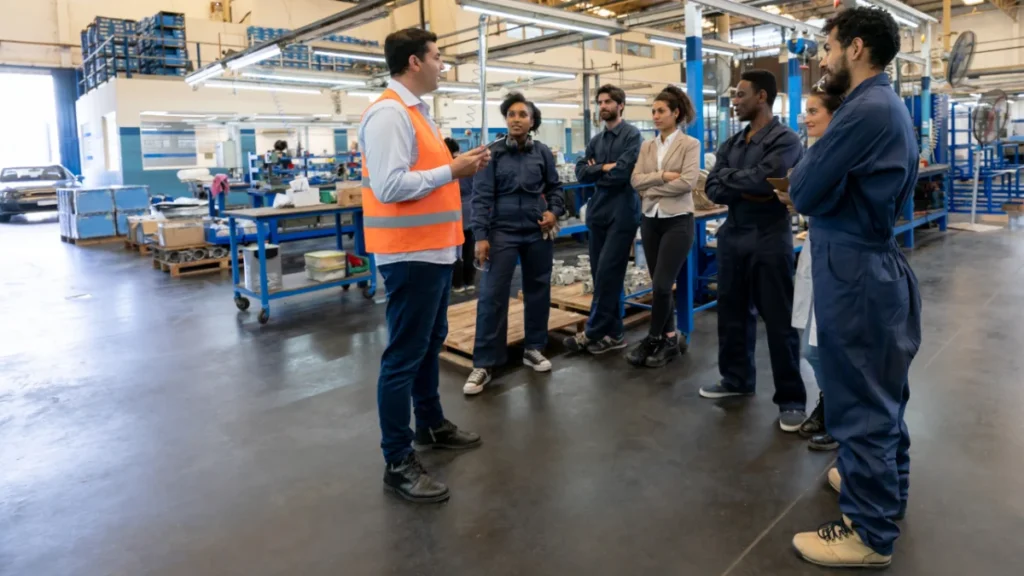
The most pervasive issue in modern manufacturing is the physical and psychological distance between those who set strategic goals and those who execute them. When leaders remain confined to their offices, relying solely on high-level KPIs and automated reports, they lose touch with the nuances of production.
"The first thing I suggest is to go down and work in the areas that they’re over," Vanzant-Stern says. "Rather than ask questions, go down and really try to understand the process. And do it."
This philosophy, often referred to as Gemba—or going to the "real place"—is not merely a symbolic gesture of leadership visibility. It is a diagnostic necessity. When leaders perform the tasks they oversee, they gain a visceral understanding of the friction points that prevent efficiency. Problems that appear as minor anomalies in a monthly report often reveal themselves as systemic bottlenecks when observed in real-time.
The Anatomy of Operational Inefficiency
Inefficiencies in manufacturing are rarely the result of a single, catastrophic failure. Instead, they are usually "hidden waste"—a cumulative buildup of unnecessary steps, redundant handoffs, and outdated protocols that have become institutionalized.
"We’re doing things that aren’t necessary, and we don’t even know why we’re doing them," Vanzant-Stern notes. This "cultural inertia" is a silent killer of productivity. Because these steps are embedded in the daily routine, employees often accept them as "the way things are done," rendering them invisible to those who are not intimately familiar with the workstation.
The Role of Collective Intelligence
To uncover these hidden inefficiencies, organizations must leverage the "collective intelligence" of their entire workforce. Vanzant-Stern emphasizes that lean is not a top-down mandate but a bottom-up collaboration.
"Everybody has their area of expertise, and everyone has something to contribute to the puzzle," she explains. When a company attempts to streamline a process without input from the floor operators, they are essentially solving a puzzle while missing half the pieces. True operational excellence requires a cross-functional dialogue where the frontline worker’s tacit knowledge is given the same weight as the process engineer’s data.
Reforming the Kaizen Event
One of the most powerful tools in the lean toolkit is the Kaizen event—a period of intense, focused improvement. However, in many organizations, these events have devolved into unproductive brainstorming sessions that yield little long-term value.
Vanzant-Stern identifies three common mistakes that render Kaizen events ineffective:
- Lack of Problem Definition: A Kaizen event is not a brainstorming session; it is a surgical intervention. If the team does not arrive with a clear, defined problem, they will spend the entire event wandering through potential solutions without ever addressing the root cause.
- Incorrect Stakeholder Representation: Often, the wrong people are in the room. Decisions are made by managers who have never operated the machines, while the people who actually know how to fix the problem are left out of the discussion.
- Failure of Sustainability: This is the most critical failure point. Many companies successfully implement a change during a Kaizen week, but once the week ends, the process reverts to its previous state.
"A lot of times in Kaizen events, we don’t talk about how are we going to keep it in place," says Vanzant-Stern. "That’s how we lose trust with our employees. The next time we try to do something, it’s going to be met with a lot less enthusiasm."
Implications: The Human Cost of Poor Lean Implementation
When lean initiatives fail, the damage is rarely limited to the balance sheet. There is a profound human cost. When management forces top-down changes that don’t stick—or worse, that make the job harder—it erodes the credibility of leadership.
This erosion of trust is a long-term liability. An organization that has been "burned" by several failed improvement initiatives will become cynical. When the next, potentially better, initiative is introduced, the workforce will be less likely to engage, viewing it as another "flavor of the month" project that will be abandoned once the executives move on to the next priority.
Moving Forward: A Shift in Strategy
The path forward for manufacturing is not about acquiring more expensive software or implementing more complex methodologies. It is about fostering a culture of transparency, consistency, and mutual respect.
Reconnecting Leadership to the Floor
Leadership must prioritize "presence." By spending time on the floor, leaders move from being "authorities" to being "partners." This creates a feedback loop where the frontline feels empowered to speak up about inefficiencies before they become major problems.
Establishing Lasting Change
To make improvements last, companies must shift their focus from the event to the system. This involves:
- Documentation: Ensuring that new processes are standardized and easily understood.
- Accountability: Assigning clear ownership of the new process to those who work it every day.
- Verification: Implementing regular checks to ensure the improvement remains in place, rather than assuming it will survive on its own.
The Power of Shared Understanding
Ultimately, the most successful lean organizations are those that treat "Lean" as a mindset rather than a program. When every employee—from the CEO to the operator—understands the why behind a change, the probability of success increases exponentially. Shared understanding turns a disparate group of employees into a unified team capable of identifying waste in real-time and collaborating on sustainable solutions.
Conclusion: Join the Conversation
The challenges facing modern manufacturing are complex, but the solutions are often found by returning to the basics of human interaction and process discipline. Dr. Vanzant-Stern will explore these concepts in much greater detail during an upcoming webinar hosted by ASSEMBLY.
This session will provide actionable strategies for leaders looking to strip away the noise of ineffective management and reconnect with the core of their production operations. By moving away from "lean-washing" and toward genuine, human-centric operational excellence, manufacturers can reclaim their competitive advantage.
Event Details:
- Topic: The Hidden Waste Inside Lean Manufacturing
- Speaker: Dr. Terra Vanzant-Stern
- Date: August 13
- Time: 2 p.m. ET
- Registration: Register for the webinar here.
Are you looking for quick answers on assembly and manufacturing topics? Explore the Ask ASM smart AI tool to help solve your most pressing production challenges.