



The Future of Asymmetric Warfare: Swarmer Acquires Ratel Robotics in Landmark $224M Defense Deal

In a move that underscores the rapid transformation of modern battlefield technology, Austin-based defense firm Swarmer Inc. has announced a definitive agreement to acquire Ratel Robotics, the Ukrainian manufacturer renowned for its robust and highly effective uncrewed ground vehicles (UGVs). The transaction, valued at up to $224 million, represents one of the most significant consolidations in the burgeoning defense-tech sector, bridging the gap between Ukrainian frontline innovation and U.S. capital-backed scalability.
The deal marks a strategic inflection point for both entities. By merging Swarmer’s proprietary AI-driven swarm autonomy software with Ratel’s battle-hardened physical platforms, the combined entity aims to redefine how multi-domain unmanned systems are deployed in high-intensity conflict zones.
The Genesis of the Deal: Merging Software and Hardware
Swarmer Inc., founded in 2023, has rapidly ascended as a leader in vendor-agnostic defense software. Its primary product is an "intelligence layer" that enables a single operator to manage hundreds of autonomous aerial and ground platforms simultaneously. This technology has been field-tested in Ukraine since April 2024, logging over 100,000 combat missions.
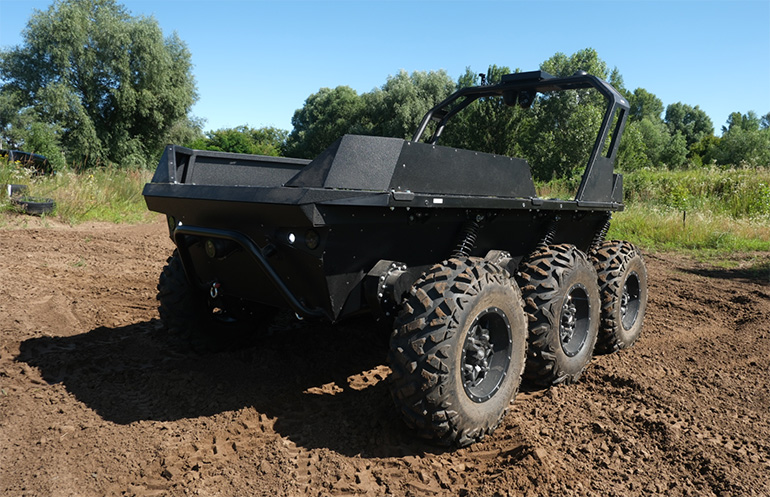
Ratel Robotics, by contrast, emerged from the urgent requirements of the Ukrainian Defense Forces. Founded by veterans who witnessed the grim realities of the frontlines, the company specializes in ground systems designed for logistics, casualty evacuation, reconnaissance, and strike missions. Their Ratel H and Ratel M platforms have become staples for Ukrainian units, valued for their durability and low-cost manufacturing.
"Ratel is a major provider of UGVs for Ukraine," said Alex Fink, co-founder and U.S. CEO of Swarmer. "Combining a battle-tested launch platform with our combat-proven autonomy software is the key to creating versatile, interoperable solutions. We are excited to have Taras Ostapchuk and his team join Swarmer to grow our business in Ukraine and beyond."
Chronology of Innovation and Expansion
The trajectory of both companies reflects the accelerated innovation cycles necessitated by the conflict in Eastern Europe.
- 2023: Both Swarmer and Ratel Robotics are established, responding to the specific operational needs of the Ukrainian Armed Forces. Ratel begins delivering its first UGV models to front-line units.
- April 2024: Swarmer’s autonomy software undergoes its first live combat validation, demonstrating the ability to coordinate swarms of drones under real-world conditions.
- September 2025: Swarmer closes a $15 million Series A funding round, signaling growing U.S. investor confidence in Ukraine-based defense startups.
- January–April 2026: Ratel Robotics captures approximately 37% of the Ukrainian Ministry of Defense’s procurement budget for UGVs, highlighting its dominance in the local market.
- September 2026: The definitive acquisition agreement is announced, with plans for Ratel to operate as a wholly-owned subsidiary of Swarmer, bringing their total headcount to nearly 500 employees.
Data-Driven Dominance: Why Ratel Stood Out
Ratel Robotics’ market position is not the result of aggressive lobbying or traditional defense marketing. Instead, its growth has been driven by organic demand from the front lines. As Alex Fink noted, the company has operated with "no salespeople, no government relations, no lobbying." Its growth is purely a testament to product-market fit—units on the ground prefer Ratel systems because they are reliable, secure, and effective.
The financial performance of Ratel is equally impressive. In 2026 alone, the company secured $86 million in contracts. Their integration into the global defense ecosystem is further validated by their adherence to NATO standards. Each Ratel H and M unit carries a NATO stock number under the NCAGE Code A3X8J and maintains an AQAP 2110 quality assurance certificate. This international certification is a critical prerequisite for potential future contracts with NATO member nations under the "Build With Ukraine" initiative.
Official Perspectives: The Strategic Vision
The acquisition has received strong backing from Swarmer’s leadership, including Chairman Erik Prince. Prince has been vocal about his strategy to build a "platform company" for technologies that have been stress-tested in the most demanding environments imaginable.
"Ukrainians have figured out how to wage war in an innovative, low-cost way, vastly superior to what the Western defense cartel has been able to do," Prince stated. "The job is to convert that knowledge and that cost-effectiveness into a sustainable, profitable, war-winning enterprise."
For Taras Ostapchuk, CEO of Ratel Robotics, the acquisition is a natural evolution of his mission to protect human life through technology. "Having served in the armed forces of Ukraine, I understand firsthand the risks soldiers face on the battlefield," Ostapchuk explained. "This is the next stage in the evolution of modern warfare—putting fewer people in harm’s way and having more unmanned assets take on the risk."
Implications for the Future of Warfare
The acquisition signals a broader shift in the defense industry, moving away from slow, multi-year procurement cycles toward agile, software-defined hardware production.
1. Scaling the "Swarm"
The primary technical synergy of this deal lies in the integration of Swarmer’s AI with Ratel’s hardware. By utilizing UGVs as mobile, resilient launch platforms for drones and interceptors, the combined company can facilitate the deployment of massive swarms—potentially numbering in the hundreds—in a fraction of the time currently required. This creates a "force multiplier" effect, allowing smaller units to project power previously reserved for larger, traditional military formations.
2. Financial and Industrial Sustainability
Swarmer brings a crucial asset to the partnership: access to U.S. capital markets. As defense startups scale, they often hit a bottleneck regarding working capital—the cash needed to buy parts and raw materials ahead of mass manufacturing. Swarmer’s ability to tap into deeper funding pools ensures that Ratel can continue to meet the rapid, surging demand for its systems without the typical delays associated with government-only financing.
3. Diversified Supply Chains
With operations already spanning Ukraine, Poland, and Estonia, the acquisition allows Swarmer to create a diversified, resilient supply chain. By maintaining a presence in both the war zone and European manufacturing hubs, the company can hedge against the inherent risks of a single-country production model while remaining close to the end-users who provide the vital, real-time feedback loop needed for software updates.
The Broader Defense-Tech Landscape
The $224 million acquisition is part of a larger, unprecedented wave of investment in defense technology. With over $14.6 billion invested in military and national security startups in the first half of 2026 alone, the industry is witnessing a "gold rush" for companies that can prove their efficacy.
From Saronic’s $1.75 billion autonomous ship program to Shield AI’s $2 billion valuation, the trend is clear: the future of national security is autonomous, distributed, and software-first. Swarmer’s move to acquire Ratel Robotics is not just an isolated corporate event; it is a calculated bet that the future of global defense lies in the rapid synthesis of frontline combat experience and cutting-edge software engineering.
Conclusion: A New Standard for Defense
As the deal awaits regulatory and shareholder approval, the industry is watching closely. If the integration of Swarmer’s intelligence layer with Ratel’s physical robotics proves as successful in practice as it appears on paper, it could set a new standard for how modern militaries procure and deploy unmanned technology.
By bypassing the bureaucratic inertia of traditional "defense cartels" and focusing on scalable, combat-tested, and cost-effective solutions, Swarmer and Ratel are positioning themselves to become the architects of a new era of warfare. As Alex Fink noted, every company in this space has grown at least fivefold this year, suggesting that the era of the autonomous, swarm-based battlefield is no longer a theoretical concept—it is the reality of the modern age.