
Beyond the Assembly Line: How Mobile Robotics is Transforming the Textile Industry

By Global Industrial Automation Review
Sponsored in part by Mouser Electronics
Main Facts: The Convergence of Mobile Manipulation and Textile Manufacturing
For decades, the standard picture of industrial automation has been defined by rigid, bolted-down machinery. Heavy, single-purpose robotic arms weld car chassis in Detroit, assemble electronics in Shenzhen, and stack consumer appliances on high-speed European lines. These fixed-base systems excel at high-volume, highly repetitive tasks in environments purposefully stripped of human variability.
However, a quiet revolution is underway on the periphery of industrial manufacturing. Sectors long deemed too complex, variable, or delicate for traditional automation—most notably the textile industry—are beginning to embrace a new generation of machines. At the forefront of this shift is the deployment of advanced mobile manipulators capable of navigating dynamic workspaces, coordinating complex control systems, and working safely alongside human operators.
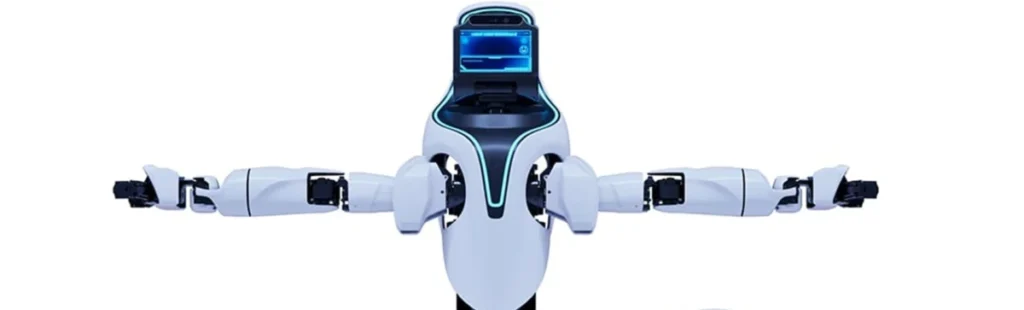
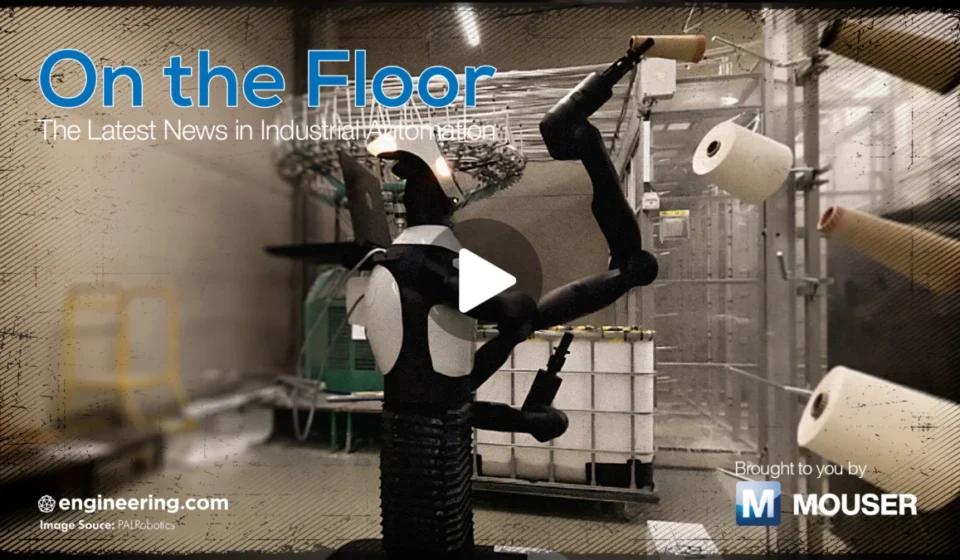
According to data compiled by the International Federation of Robotics (IFR), a groundbreaking pilot program is currently underway at CETRIKO, a prominent Spanish textile manufacturer. At the heart of this initiative is the TIAGo Pro, a sophisticated mobile manipulator developed by PAL Robotics.
The robot is not merely observing production; it is actively engaged in core operational workflows. Specifically, the TIAGo Pro has been tasked with handling yarn cones—a job that has historically required human workers to perform thousands of repetitive, physically taxing lifting and positioning motions daily. By integrating autonomous mobile platforms with dextrous robotic arms, CETRIKO and PAL Robotics are proving that the flexibility of mobile robotics can finally bridge the automation gap in soft-goods manufacturing.
Chronology: From Fixed-Base Automation to Collaborative Mobile Robotics
To understand the significance of the CETRIKO pilot, it is necessary to trace the evolution of industrial robotics from its rigid origins to today’s fluid, mobile implementations.
Phase 1: The Era of Fixed Infrastructure (1960s–2000s)
Industrial robotics began with the Unimate in the 1960s, designed to handle die-casting machines. For the next forty years, growth was concentrated in industries with massive capital expenditures and long product lifecycles, primarily automotive. These robots required safety cages, fixed floorspace, and precise pre-programmed paths. Textiles, characterized by flexible materials, variable batch sizes, and delicate handling requirements, remained stubbornly manual.
Phase 2: The Collaborative Turn (2008–2018)
The introduction of ISO-certified collaborative robots (cobots) in the late 2000s changed the calculus. By incorporating force-limiting sensors and intuitive programming, manufacturers could place robots directly next to human workers without relying on safety fencing. While this opened doors for electronics assembly and small-part handling, most cobots remained tethered to stationary workbenches, limiting their utility in sprawling manufacturing floors.
Phase 3: The Rise of Autonomous Mobile Robots (AMRs) (2015–2022)
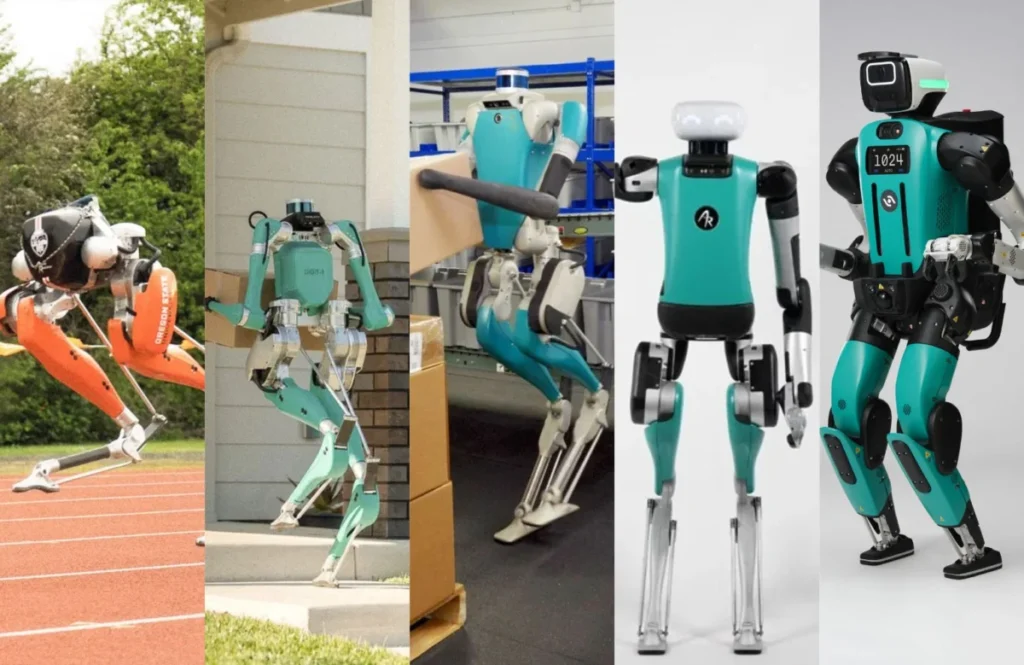
Simultaneously, Autonomous Mobile Robots (AMRs) revolutionized warehousing and logistics. Companies like Amazon, Kiva Systems, and various forklift automation firms proved that mobile robots could navigate complex, changing environments using LiDAR, SLAM (Simultaneous Localization and Mapping), and advanced sensor suites. However, these machines were largely limited to transport—moving bins or pallets from point A to point B without any manipulation capabilities.
Phase 4: The Mobile Manipulator Era (Present)
The current frontier—exemplified by PAL Robotics’ deployment at CETRIKO—is the marriage of AMRs and articulated robotic arms. Known as mobile manipulators, these systems possess both locomotive freedom and fine motor skills.
- 2021–2022: PAL Robotics refines the TIAGo (Take It And Go) product line, focusing on dual-arm coordination, human-robot interaction interfaces, and robust mobile bases capable of operating in human-centric industrial environments.
- Early 2023: Engineering teams conduct rigorous simulation and safety testing for textile-specific applications, identifying yarn cone handling as a primary bottleneck in spinning and weaving operations.
- Late 2023–Present: The collaborative pilot program goes live at CETRIKO’s facilities in Spain. The TIAGo Pro is integrated into the active factory floor, interacting with material staging areas, lifting yarn cones, and positioning them for downstream processing alongside human textile technicians.
Supporting Data: Metrics Shaping the New Industrial Paradigm
The business case for mobile manipulators in non-traditional sectors is built on a foundation of shifting labor demographics, technological cost reductions, and rising productivity demands. Industry analysts and robotics organizations have published key metrics highlighting this transformation:
1. Growth in the Mobile Manipulator Market
Market research reports indicate a compound annual growth rate (CAGR) of over 18% for mobile manipulators through the end of the decade. As components such as 3D cameras, LiDAR sensors, and high-torque-density actuators become more affordable—partially driven by consumer electronics and automotive supply chains—the total cost of ownership (TCO) for these sophisticated systems has dropped significantly.
2. Ergonomic Relief and Injury Reduction in Textiles
In textile manufacturing, musculoskeletal disorders (MSDs) related to repetitive lifting, bending, and reaching account for a significant percentage of workplace injuries. Data from European occupational health authorities shows that manual yarn cone handling contributes to cumulative trauma disorders in the wrists, shoulders, and lower back. Early trials indicate that delegating these tasks to mobile manipulators reduces worker exposure to high-force ergonomic stressors by up to 65% in targeted zones.
3. Operational Flexibility Metrics
Unlike fixed automation lines that require weeks of downtime to reconfigure for a new product run, mobile manipulators can be dynamically reassigned. According to IFR benchmark studies, mobile manipulation systems reduce re-deployment downtime by an estimated 70% compared to traditional automation, allowing mid-sized manufacturers like CETRIKO to pivot rapidly between different yarn weights, colors, and material blends without stalling overall plant throughput.
Official Responses: Insights from Industry Leaders and Engineers
The integration of advanced robotics into a traditionally non-automated sector has drawn commentary from key stakeholders across the automation and textile ecosystems.
"The expansion of robotics beyond automotive and electronics is no longer a distant projection; it is happening on factory floors today," notes a senior automation analyst following the IFR reports. "When you combine mobility with dexterous manipulation, you unlock applications that were previously thought impossible to automate economically."
Engineering firms partnering on these initiatives emphasize the critical role of advanced electronic components. Through sponsorship support from industry leaders like Mouser Electronics, hardware developers have access to the latest embedded processing units, high-reliability connectors, and power management systems necessary to keep mobile robots running through multi-shift industrial operations.
Representatives from PAL Robotics have highlighted the unique engineering challenges overcome during the CETRIKO deployment:
"Designing a robot to operate in a structured laboratory is one thing; deploying a mobile manipulator into an active textile plant where material textures shift, lighting varies, and human co-workers move dynamically is an entirely different engineering hurdle," a PAL Robotics project lead explained. "The TIAGo Pro utilizes state-of-the-art navigation and compliant control algorithms to ensure that the machine respects human spatial boundaries while maintaining the precision required to handle delicate textile inputs."
CETRIKO plant managers have similarly praised the collaborative nature of the trial, noting that employee apprehension quickly gave way to acceptance as workers realized the robot was designed to absorb the most fatiguing aspects of their daily routines rather than replace their oversight.
Implications: What Mobile Manipulation Means for the Future of Manufacturing
The successful integration of PAL Robotics’ TIAGo Pro at CETRIKO signals profound changes for global manufacturing, labor markets, and supply chain resilience.
1. Democratization of Advanced Automation
Historically, high-end robotics required massive production volumes to justify the engineering overhead of custom integration. Mobile manipulators, by virtue of their adaptability, lower the barrier to entry. Because a single mobile robot can navigate existing facility layouts without requiring costly structural modifications (such as pouring new concrete bases or installing overhead gantry systems), small and medium-sized enterprises (SMEs) can now compete with global conglomerates in automation adoption.
2. Redefining the Human-Robot Workspace
The fear of total automation displacement is gradually being replaced by the reality of symbiotic human-robot collaboration. In the textile sector—an industry that has historically relied heavily on low-cost manual labor in various global regions—rising labor shortages and wage pressures make automation a necessity for survival rather than a luxury. By offloading monotonous material handling tasks (such as managing yarn cones) to mobile platforms, human workers are elevated into supervisory, quality control, and process optimization roles.
3. Supply Chain Agility and Local Reshoring
One of the core vulnerabilities exposed by recent global disruptions is the rigidity of long, centralized supply chains. By making flexible manufacturing economically viable in high-wage regions, mobile robotics supports the reshoring of textile and light manufacturing industries. When a factory can reconfigure its floor plan and product lines overnight via software updates to its mobile robot fleet, the geographic distance between production and consumer shrinks in practical terms.
4. Technical Challenges Ahead
Despite the success of the CETRIKO pilot, challenges remain. Battery management and autonomous docking for 24/7 operations require further optimization. Additionally, standardizing safety protocols for mobile manipulators operating in unstructured, high-traffic environments is an ongoing priority for international standards organizations.
Conclusion
The partnership between PAL Robotics and CETRIKO, highlighted by the deployment of the TIAGo Pro, represents a watershed moment for industrial automation. By proving that mobile manipulators can successfully navigate and contribute to the delicate, variable environment of textile manufacturing, the industry has opened the door to a new era of productivity. As component technologies continue to advance—bolstered by robust electronic supply chains and innovative engineering—the sight of mobile robots working seamlessly alongside human colleagues will soon transition from a pioneering pilot program to the global standard across all sectors of manufacturing.