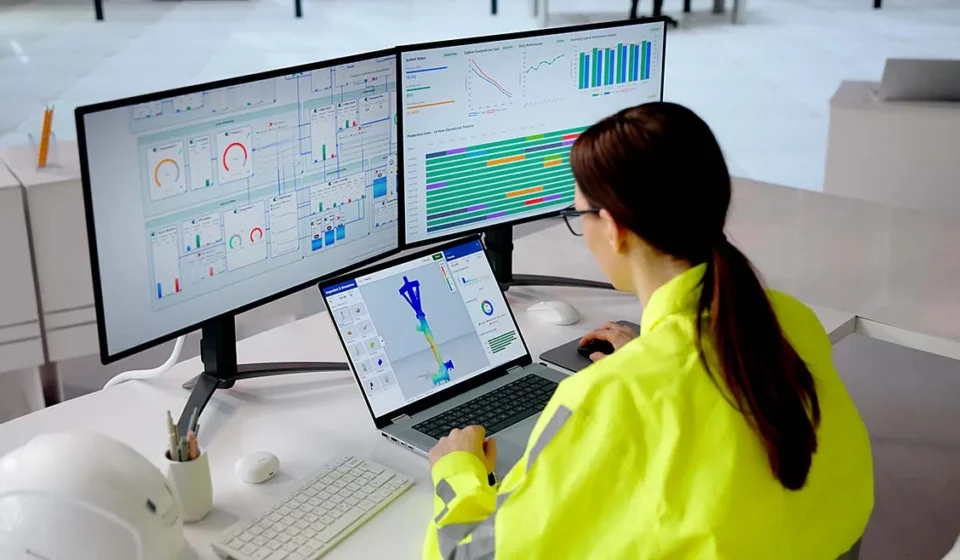

Metrology—the science of measurement—is the invisible architecture of the modern world. It is the silent partner in every transaction, every medical diagnosis, and every safety-critical engineering feat. When a patient receives a precise dose of radiation therapy, when a fuel pump measures a gallon of gasoline, or when a precision-engineered component is integrated into an aerospace engine, the integrity of that process relies entirely on the metrology laboratory.
However, the field is currently facing a dual challenge. On one side, technical and regulatory requirements are becoming increasingly complex. On the other, the profession is losing its most experienced practitioners to retirement faster than the industry can train their successors. As the workforce shrinks, artificial intelligence (AI) has emerged not as a replacement for human expertise, but as a critical force-multiplier. From adaptive tutoring and quality compliance to uncertainty calculation and predictive data analysis, AI is beginning to touch nearly every function of the calibration laboratory.
The Evolution of the Calibration Lab: A Chronology of Integration
The integration of computational tools into metrology is not new; the discipline has long relied on statistical software and automated data acquisition. However, the shift toward AI-driven workflows represents a fundamental change in how laboratories process information.
- The Pre-Digital Era: Metrology was defined by manual record-keeping, analog gauges, and physical standards. Errors were caught primarily through peer review and manual double-checks.
- The Automation Era (Late 20th Century): The introduction of digital instrumentation and early statistical process control (SPC) software allowed labs to handle larger volumes of data, though the interpretation remained heavily manual.
- The Compliance Era (2000s): With the formalization of ISO/IEC 17025, the focus shifted to rigorous documentation and traceability. Laboratories became burdened by the sheer weight of clerical and administrative requirements.
- The AI Integration Era (Present): Laboratories are moving beyond simple data logging to using Large Language Models (LLMs) and predictive algorithms to audit documentation, simulate complex uncertainty budgets, and provide adaptive, real-time training for technicians.
Supporting Data: Why AI Fits the Metrology Paradigm
Metrology is a rule-governed, document-heavy, and highly structured discipline. These characteristics make it an ideal environment for AI, which thrives on pattern recognition and adherence to established logic. Unlike creative fields where AI might struggle with nuance, metrology relies on a foundation of international standards—such as the Guide to the Expression of Uncertainty in Measurement (GUM)—that provide a clear, mathematical roadmap for the technology to follow.
According to industry insights, laboratories adopting AI-assisted workflows have seen significant improvements in three key areas:
- Reduction in Clerical Overhead: By automating the cross-referencing of lab procedures against ISO/IEC 17025 standards, labs can reduce the time spent on internal audits by up to 30%.
- Training Velocity: Adaptive AI tutoring systems have been shown to shorten the time required for new technicians to achieve competency by offering personalized, iterative feedback that mimics the presence of a senior mentor.
- Data Reliability: AI-driven anomaly detection can identify drift in reference standards weeks or months before a manual review might flag a deviation, significantly reducing the risk of "out-of-tolerance" events.
Training and Education: Closing the Skills Gap
The traditional arc of metrology education—instruction, supervised bench time, and competency sign-off—is under strain. AI relaxes the structural limits of this process. Where conventional training material is static, AI-driven instruction adapts to the learner in real-time.
For instance, an AI tutor can recognize when a technician confuses "tolerance" with "measurement uncertainty" and immediately route them to specific, worked examples to clarify the distinction. It creates a consequence-free environment where learners can simulate rare but high-stakes events—such as a failed interlaboratory comparison or a major environmental excursion. This responsiveness provides, at scale, the personalized attention that once required a one-on-one mentor. For credentials like the ASQ Certified Calibration Technician (CCT), this level of individualized practice is a significant accelerant.
Quality Compliance: From Clerical Burden to Continuous Oversight
Accreditation under ISO/IEC 17025:2017 is a monumental documentation task. Laboratories must maintain a comprehensive management system and prove impartiality and competence to assessors.
Language-model systems are proving highly effective at mapping complex clauses to a laboratory’s specific procedures. They can surface gaps between what a document says and what it requires, review records for consistency, and flag contradictions during internal audits. Crucially, this does not automate accountability; the lab manager remains the ultimate authority. Instead, it removes the "clerical drag," allowing highly skilled professionals to shift their focus from rote document maintenance to the active, continuous improvement of the quality system.
Method Validation and Uncertainty Calculations
One of the most complex tasks in the lab is the calculation of measurement uncertainty. A budget under the GUM requires identifying contributors, assigning distributions, computing sensitivity coefficients, and estimating effective degrees of freedom via the Welch–Satterthwaite relation.
AI acts as a "second set of eyes" on these calculations. It can draft a budget from a stated measurement model, explain the reasoning behind a specific distribution, and—most importantly—catch the unit or propagation errors that quietly corrupt results. Because AI can run thousands of Monte Carlo simulations per second, it provides a level of verification that is both faster and more exhaustive than manual peer review. However, the non-negotiable condition remains: every number must be reproducible, auditable, and ultimately validated by a human expert.
Implications: The Rise of Domain-Specific Assistants
The emergence of "general-purpose" AI has led to a crucial pivot in the industry. Generic chatbots often produce "plausible but incorrect" answers, which are dangerous in a field where a misunderstood traceability concept or a bad coverage factor carries significant safety implications.

This has paved the way for a new category: the AI-powered metrology assistant. These are domain-specific systems, such as MetTutor, that are "grounded" in trusted references like the GUM and ISO standards rather than the open internet. These systems represent a fundamental shift in the industry: they are tools designed to be anchored in the documents the profession already trusts.
Necessary Cautions and Ethical Oversight
The adoption of AI in metrology must be governed by three fundamental principles:
- Validation: Before an AI system is deployed, its outputs must be checked against authoritative sources. It must be qualified just as a lab would qualify a new measurement instrument.
- Human Oversight: AI complements the experienced metrologist’s intuition; it does not replace it. The "human in the loop" is essential for competency sign-offs and final accountability.
- Currency: Standards and practices evolve. A system trained on a superseded revision of a standard can become a liability. Periodic review of the AI’s logic against current standards must be a permanent part of the laboratory’s quality process.
Conclusion: A Measured Outlook
The trajectory for the calibration laboratory is clear. As the workforce continues to evolve due to retirements, the knowledge that once lived exclusively in the heads of senior staff is being captured, structured, and made available on demand.
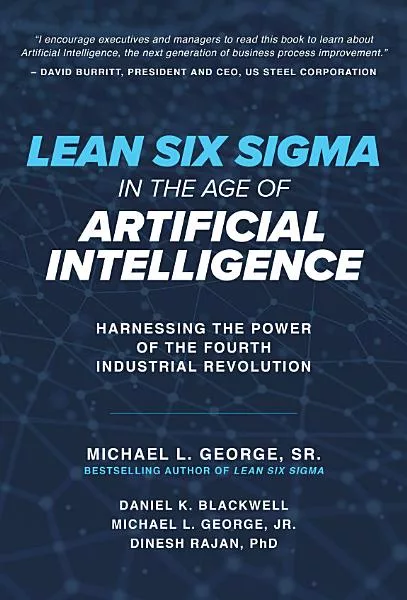
AI does not displace the fundamentals of metrology. Traceability, uncertainty, and disciplined measurement assurance remain the substance of the profession. Instead, well-built AI assistants offer a faster, more scalable route to competence and a sharper set of eyes on the data the laboratory already holds. For a profession that quietly underpins safety, global commerce, and public health, this technological evolution is not just an opportunity—it is a necessary step to maintain the integrity of our world’s measurements. The goal is not to automate the human out of the equation, but to empower them with the precision and insight required to meet the challenges of the future.