


If the acronym "QMS" conjures images of dusty binders, rigid approval workflows, and the endless pursuit of document control, you are not alone. For decades, the Quality Management System has been the bedrock of the factory floor—a place where standard operating procedures (SOPs) go to live a long, well-governed life. However, in the high-stakes, hyper-dynamic world of production additive manufacturing (AM), a document-centric QMS can be perfectly compliant on paper while leaving an organization dangerously exposed in reality.
The fundamental shift in modern manufacturing is simple but profound: in AM, the critical question is no longer merely, "Do you have a procedure?" It is, "Can you prove what actually happened to this specific part, quickly, consistently, and at scale?" For many AM operations, the uncomfortable answer is that they do not possess a quality system; they possess a quality library.
The Core Conflict: Governance vs. Granularity
A conventional QMS excels at governance. It is masterfully designed to manage training records, CAPA (Corrective and Preventive Action) workflows, and audit trails for documentation. It ensures that an organization behaves with a baseline level of consistency. But AM has a habit of turning the concept of "consistency" into a massive, multifaceted data problem.
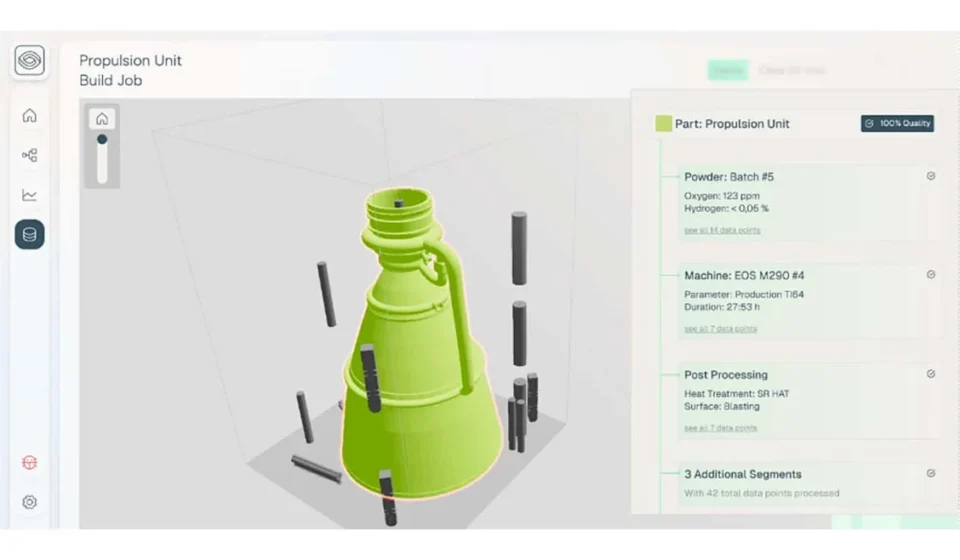
In traditional subtractive manufacturing, the part’s history is relatively linear. In additive manufacturing, quality evidence is not a single document; it is a sprawling, interconnected chain of facts. This chain includes the state of the powder, its reuse history, specific build parameters, real-time machine events, the post-processing route, inspection outcomes, and, perhaps most importantly, a record of what changed since the last accepted build.
When this chain of evidence is siloed in spreadsheets, shared drives, or fragmented email chains, an organization can still technically ship parts. They can even pass audits. But they do so the "hard way"—by manually reconstructing reality under the intense pressure of a customer inquiry or a regulatory deadline. This is not quality management; this is "quality theater."
Chronology of a Quality Failure
The transition from a manual "library" approach to a systemic "evidence" approach is often triggered by a specific, recurring crisis.
- The Pre-Production Phase: Teams define the process. Everything is documented in a static PDF or Word file. Initial validation looks promising.
- The Scaling Phase: Production ramps up. Different technicians, multiple machines, and varied powder batches introduce noise. Documentation struggles to keep pace with the volume of data.
- The Incident: A non-conformity is detected, or a customer requests a deep-dive traceability report on a serialized part from six months ago.
- The Investigation: Quality engineers spend days, sometimes weeks, manually collating data from ERPs, MES logs, machine-native files, and personal spreadsheets.
- The Realization: Leadership realizes that while they have "records," they do not have "answers." The information is locked in formats that are not queryable or cross-comparable.
Supporting Data: Why Document-Centricity Fails
Auditors today are moving away from requesting "best-of" slide decks. They are increasingly focused on the part-level story that survives cross-examination. In an era of digital manufacturing, the questions that matter rarely live inside one document. They cross the entire digital thread.
Consider the complexity of modern AM audits:
- Powder Integrity: Which batch was used, and how many times had it been recycled?
- Parameter Stability: Was the machine running on the validated "Gold Standard" parameter set, or had a tweak been made to address a build issue?
- Machine Health: Were there specific events or sensor anomalies recorded during the build that correlate with the final inspection failure?
- Traceability: Which inspection results apply to this specific serialized part?
If answering these questions requires manual hunting through folders, the organization does not have an audit trail—they have an ongoing, high-risk investigation. This lack of integration is a significant drain on resources. Studies in digital manufacturing indicate that up to 30% of quality engineering time is spent on "data reconciliation" rather than actual quality improvement or process optimization.
Implications for the C-Suite and Operations
The quiet reinvention of quality management is now underway, driven by the inherent nature of AM. Because powder-bed fusion and other AM processes are sensitive to drift, evidence must be granular and interconnected. The center of gravity is shifting from "document control" to "process evidence."

The MES Fallacy
A common mistake for CTOs and operations leaders is attempting to force an Execution System (MES) to act as a Quality System. The MES is designed to be the heartbeat of the workflow: it handles scheduling, routing, timestamps, and operator sign-offs. It is an execution tool, not an evidence tool. When companies try to "solve" AM quality by stuffing custom fields and attachments into an MES, they inevitably end up back in Excel. They are effectively trying to make a workflow tool do the job of a database, leading to a brittle, inflexible infrastructure.
The Missing Layer: Structured Truth
The production stack requires a clear separation of "truths." There is the Execution Truth (the schedule), the Product Truth (the CAD and specs), and the Process Truth (the actual data generated during the build). The "missing layer" is the system that links these truths together at the part level.
AM-Specific Modeling
AM fleets are notoriously heterogeneous. You have different OEMs, different machine generations, varying log formats, and disparate inspection flows. A traditional system can store an attachment, but it cannot normalize this data. Normalization—the ability to compare data across machine platforms—is the key to moving beyond "prove it passed" to "prove it is stable."
When data is modeled correctly, organizations can perform Statistical Process Control (SPC) and trend analysis without spending the first week of every month cleaning spreadsheets. This leads to:
- Reduced Scrap Rates: Early detection of drift before parts fail inspection.
- Accelerated Qualification: Rapid, data-driven IQ/OQ/PQ (Installation, Operational, and Performance Qualification) cycles.
- Regulatory Resilience: Transforming "audit readiness" from an emergency project into a constant, passive state of operations.
Official Industry Perspective: The Future of Qualification
Regulatory bodies in aerospace and medical device manufacturing are signaling a move toward more rigorous, data-intensive validation. The industry is reaching a consensus: qualification is the moment the truth arrives.
If your qualification evidence lives in static files, you can satisfy the requirement once, but you will struggle to sustain it. Regulated customers are no longer satisfied with a one-time dossier; they want ongoing confidence that process stability holds over time. As one quality lead recently remarked, "We don’t need more paperwork; we need better evidence that demonstrates our process is under control, not just that we have a policy saying it should be."
The Simple Leadership Test
For any leader questioning their current quality maturity, the "simple test" is as follows: Pick one shipped part at random. Now, attempt to retrieve a coherent, linked chain of evidence—powder history, build parameters, post-processing routes, and inspection data—within fifteen minutes.
If this task involves multiple departments, several manual collations, and a degree of "heroic" effort from staff, you have identified the gap. This gap is not a failure of personnel; it is a failure of the system.
Conclusion: Maturity is Not More Paperwork
Additive manufacturing is not killing the QMS; it is forcing it to evolve. In a production environment that is inherently data-rich and highly regulated, quality management must move beyond the static document. It must embrace process evidence that behaves like a living system.
This transition might sound like "more software," but the reality is quite the opposite. It represents less chaos, fewer spreadsheets, and fewer bespoke workarounds. It marks the end of relying on "heroic individuals" to manually construct a quality story every time a client or auditor comes calling. In the world of production additive manufacturing, true maturity looks like this: the automatic generation of audit-ready proof as a default output of the manufacturing process. By shifting the focus from documenting the intent of quality to proving the reality of the process, manufacturers can finally unlock the true promise of additive at scale.